When the Civil War began the South had a large advantage over the North when it came to the mounted arm. Most of the high ranking officers in the pre-war cavalry were Southerners (like Robert E. Lee) and sided with their native section. The men who soon made up the ranks of the cavalry were familiar with horses whereas many Northern recruits had never ridden a horse before. It was no surprise that the Southern cavalry was far superior to start the war. Famed Confederate cavalier J.E.B. Stuart made several bold rides around the Union army in the first two years of the war bringing glory to himself and his men and embarrassment to his foes.
The North was learning though and there were some rays of hope. Early in the war the Union cavalry was used as pickets and escorts and never really fought as a unit. Being used this way brought little in the way of combat experience that was sorely needed. It was at Second Bull Run that John Buford’s cavalry turned back Confederate pursuit and allowed the army to retreat unmolested. When Joseph Hooker assumed command of the Army of the Potomac he created a Cavalry Corps so that they could come together and fight as a unit. Training intensified and though the Union cavalry botched their assignment during the Chancellorsville Campaign they were improving.
In the late spring of 1863 Robert E. Lee believed that the time was right to invade the North for a second time. His cavalry was gathered near Culpeper, Virginia to prepare and the lead elements of the infantry were already on the march. Lee was invited for a formal review of the cavalry on June 5 but was not able to attend. The review went on and included a simulated battle much to the delight of local ladies. Another was staged on June 8 when Lee was present. Stuart commanded the largest cavalry force he would have during the war, about 9,500 men. New units were brought in to bolster his strength like Beverly Robertson’s North Carolinians and “Grumble” Jones’ Virginians. His men bedded down for the night after the review not anticipating any action.
Action was what they would get. The Union cavalry, now under Alfred Pleasanton, was coming to put his new command to the test. He organized his force into two wings, one under John Buford would attack from the north and the other under David Gregg would attack from the south. He was tasked with dispersing and destroying the Confederates and envisioned his two-pronged attack doing just that. He did not know exactly where the Confederates were and how many men they had but he was supplemented by two columns of hand-picked infantry regiments to back him up.
At around daybreak on June 9 Buford’s men crossed Beverly’s Ford in a dense fog. Jones’ men were caught by surprise and rode out for the fight. Some men were barely dressed and few had time to saddle their mounts. The delayed Buford long enough for Stuart to bring some of his Horse Artillery to bear. This also bought time for Wade Hampton’s Brigade to come up. A cavalry charge against this position was repulsed with heavy loss to the 6th Pennsylvania. Robert E. Lee’s son, Rooney, brought up his brigade and there was heavy fighting for the possession of a stone wall but eventually Buford’s men triumphed and to their surprise the Confederates began pulling back.
They were pulling back because Gregg’s column was arriving on the field. One of Gregg’s divisions had gotten lost and he had been delayed. They went around Robertson’s Brigade which was guarding Kelly’s Ford and arrived around 11 AM. Fleetwood Hill, Stuart’s HQ, was directly to their front and looked like easy pickings. Only one howitzer was there and it somehow kept Gregg’s men at bay. When Gregg realized that was all that was blocking him he moved to attack but was met by Jones’ men coming from the other end of the field. A series of charges and counter-charges took place with Stuart’s men eventually gaining the upper hand.
After ten hours of fighting Pleasanton called for a withdraw. He had lost about 900 men while Stuart had lost about 500. Despite Stuart claiming victory he faced criticism from all angles. He had been caught with his pants down and was very nearly whipped. Cavalry after all was supposed to prevent surprise attacks. The Union cavalry had also shown much more grit and determination then ever before and their power was on the rise. Stuart, who saw his reputation tarnished, was looking to restore it and once again proposed riding around the Union army. This time it would have near-disastrous consequences for Lee and the Confederates.
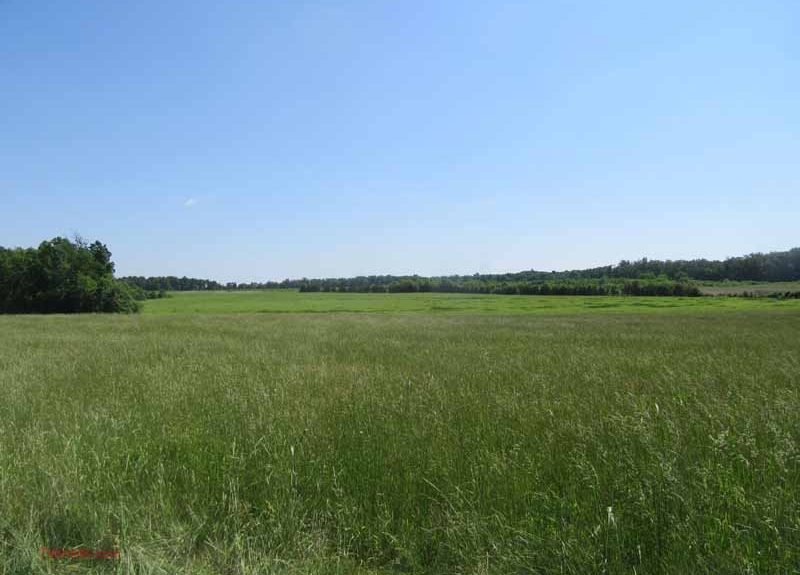
I have visited the battlefield here twice, first in 2012 and again in 2017. Much of the battlefield is preserved as the Brandy Station Battlefield by a grass-roots preservation effort and the Civil War Trust. Also nearby is the Graffiti House where many of the wounded were taken along with a marker honoring John Pelham, Stuart’s top artilleryman, who was killed at Kelly’s Ford in a separate engagement.