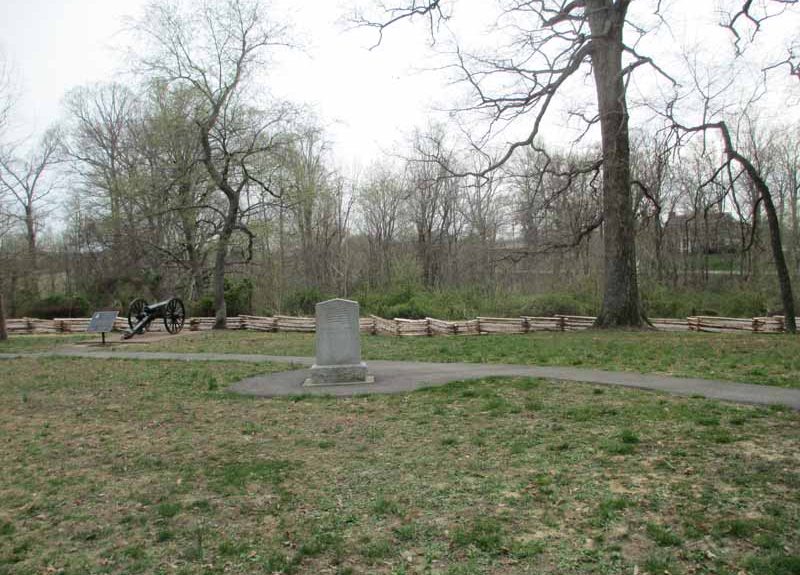
While the Gettysburg and Vicksburg Campaigns were going on there was another event taking place. Confederate raider John Morgan launched a raid across the Ohio River. Beginning in Tennessee and 46 days later ending in Ohio near the Pennsylvania border Morgan intended to draw away troops from the main Union efforts. It was hailed as daring by the Southern press but like the other two major events of the summer of ’63 it ended in defeat for the Confederacy.
Morgan had with him 2,460 men and 4 cannon. The local commander in Tennessee, Braxton Bragg, intended for Morgan to only go into Kentucky to stir-up pro-Southern sentiment in the North. Morgan had other ideas and decided to cross the Ohio River and bring the war to Indiana and Ohio. Bragg allowed him to do what he wanted in Tennessee and Kentucky but ordered him to not cross the Ohio River. The raid began on June 11 and was into Kentucky on July 2. Bragg had other problems as William Rosecrans began to stir in Murfreesboro and began his Tullahoma Campaign that maneuvered Bragg out of Tennessee.
Morgan captured the Union garrison at Lebanon, Kentucky but his younger brother was killed there. After riding north toward Louisville and fighting a few small skirmishes with home guard troops he turned for the river. He sent a diversionary party toward Louisville to confuse the Union (they were quickly captured after crossing the river) and on July 8 he seized two steamboats and ferried his 1,800 men across the river. Morgan had sent spies across the river to gauge local Copperhead sentiments to see if they would join in the effort. Their response was less than enthusiastic though the spies were not able to return to Morgan.
Oliver Morton, the governor of Indiana, called for all able-bodied men to take up arms and join the militia and thousands joined up. The department commander, Ambrose Burnside, began organizing Federal troops to cut Morgan off from the Ohio River. This motley force of militia and home guardsmen met Morgan first at Corydon, Indiana. Morgan won the battle easily but suffered about 50 casualties himself.
Small towns all along Morgan’s route were terrorized. Only the Masonic Lodge in Versailles escaped plunder. When Morgan’s men did plunder it Morgan ordered it returned. Morgan was a mason and punished his men for this. On July 12 Morgan’s men plundered smoked hams from a storehouse in Dupont, Indiana. The hams began to attract flies and were discarded marking their patch for the pursuing Union forces. When his force entered Ohio on July 13 Union cavalry was hot on their heels.
He bypassed Cincinnati and took a more northerly path through Ohio before heading back toward the Ohio River near Buffington Island. Burnside was able to guess his intentions and moved some of his men and gunboats there to block Morgan. Morgan arrived on July 18 but declined to attack a small militia force guarding the ford since his men and horses were tired. By the next morning Federal troops had arrived. The following day Morgan was defeated soundly and 750 of his men were captured. Morgan moved away and tried again 20 miles to the east but Union gunboats and the river put an end to the attempt. About 300 men did make it into West Virginia and escaped leaving Morgan now with only about 400 men.
Morgan continued raiding. He burned canal locks and bridges at Nelsonville but moved off before the flames completed their work. The local citizenry were able to save much of the stock. Union cavalry was also only 2 hours behind. and caught up to him at Old Washington and on July 26 at Salineville where he was defeated in battle. With his command on the run it was only a matter of time until the Union caught up again and ended the raid, which it did later that day near West Point.
The prisoners were taken to a prison rather that a POW camp as it was rumored that Union officers received similar treatment. Many of the enlisted men were eventually transferred to Camp Douglas in Chicago. Morgan and six others later tunneled their way out of the Ohio Penitentiary on November 27 and scaled the walls and escaped. He returned to the South to a hero’s welcome.
Morgan’s Raid was costly for both sides. Much property was stolen or damaged during the raid in the North and about 6,000 prisoners were paroled by Morgan. With no hindsight available at the time it appeared that the raid was made in conjunction with Lee’s invasion of Pennsylvania though we now know that he made the raid in violation of his orders. A Civil War Trails route follows the path of the raid with several small markers along the route where combat took place. In Corydon a small park marks the spot of the battle and a monument marks the location of Morgan’s surrender at West Point.