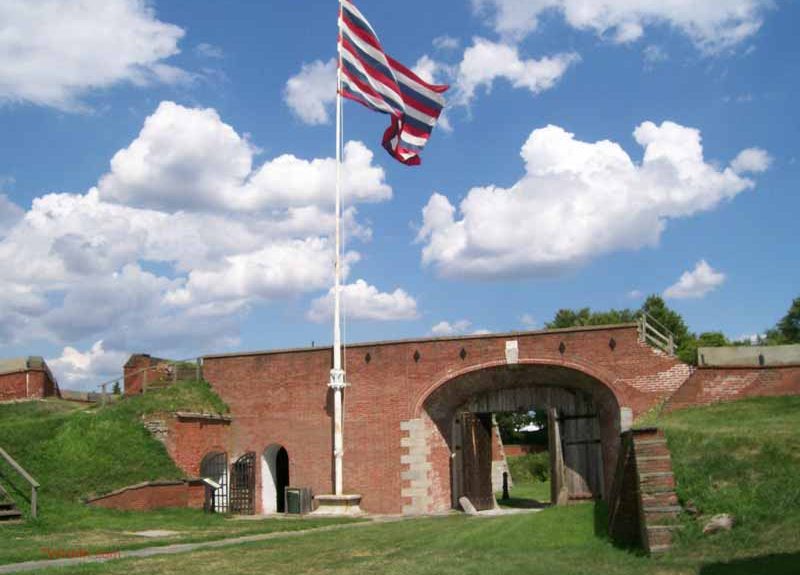
Philadelphia was the most important city in Colonial times. It was one of the largest cities in the British Empire. Founded by William Penn, who was a Quaker, he strove to live peacefully with the Natives living in the area and the result was that no fortifications were built and Philadelphia prospered. By the 1770s that had changed. Not only were the Natives not as powerful but with Philadelphia being the largest port in the New World it was a military target. A fort was proposed on Mud Island for its defense and construction began in 1771 but only two sides were completed.
Following Independence the Colonists continued construction of the fort as well as another across the river in New Jersey. These two forts needed to control the Delaware River to keep the Royal Navy out. Obstructions were placed in the river designed to rip holes in ships. A channel was left for navigation and only a select few river men knew where it was.
The British captured Philadelphia in September 1777 driving George Washington out. A siege then began of the newly named Fort Mifflin and its 400 man garrison. The siege works were planned by the same engineer who designed the fort. The defenders held until November 10 when British fire intensified and they evacuated under cover of darkness but 250 of the garrison were killed or wounded. The fort had bought time for Washington to reorganize and fall back to Valley Forge unmolested.
Today Fort Mifflin is preserved as the Fort Mifflin Park.