In the spring of 1864 U.S. Grant was hitting Robert E. Lee’s Confederate Army of Northern Virginia hard. It was costing Grant a great deal as his army had already sustained over 50,000 casualties since the beginning of May and despite the losses he continued to slide to Lee’s left after every engagement from the Wilderness to Totopotomoy Creek. He used the Pamunkey River to shield his movements and crossed onto the south bank near Bethesda Church, where Lee moved to attack. Grant’s men repelled Lee’s attack there and continued moving on.
Lee knew he had to do something. Grant was going to draw on reinforcements from Benjamin Butler’s Army of the James just to the south on the Bermuda Hundred Peninsula and 16,000 men in the XVIII Corps under William Smith were already on their way to join Grant on June 1. Lee called on reinforcements of their own, bringing Robert Hoke’s Division of 7,000 men from south of the James River as well. Lee now had about 60,000 men. Grant’s army was swelling again to about 108,000.
The two armies were on a collision course near the tavern of Cold Harbor. Cold Harbor meant that there was room to stay for the night for a traveler but they could not get a hot meal there. There had been fighting over this ground before, back at Gaines’s Mill in 1862 and Union soldiers found skeletons on the field. By taking control of the crossroads at the tavern Grant could bring more reinforcements in from Butler and either move on Richmond 10 miles away or attack Lee from another direction.
The fighting began on May 31. Cavalry from both sides were skirmishing with each other and Lee called on Richard Anderson’s Corps to reinforce the Confederate cavalry. Hoke’s men coming from south of the James were the first to arrive and with infantry support now up Union cavalry commander Phil Sheridan ordered his men back. Grant knew that Smith would be arriving and wanted control of the crossroads so Horatio Wright’s VI Corps was ordered to take control of it with the help of the Union cavalry.
Lee was planning on attacking what he believed to be a small cavalry force to his front to clear it away. Anderson did not coordinate with Hoke and Hoke’s orders were unclear to him. so his men went forward but his assault was turned back by Union cavalry under Wesley Merritt armed with Spencer repeating carbines who held their ground. Hoke moved his men forward late and was recalled quickly. At about 9 AM Wright’s men began to arrive on the field and they began to entrench. Grant had intended for them to attack immediately but after a 15 mile all night march they were exhausted and with Wright unsure about the enemy’s strength he decided to wait.
Smith’s men began arriving around 3 PM and took up positions to the right of Wright. An attack was ordered for the evening and Gouverneur Warren’s V Corps was to send reinforcements as well. Henry Lockwood’s division was sent but did not arrive in time for the assault as Lockwood would get lost and would be relieved of command afterwards. It would not have mattered anyway. At 6:30 PM the attack went forward but Lee’s men had not been idle and had prepared defensive works of their own.
The assault made little headway. The only success was when William Truex’s brigade found a gap in the Confederate line near a brush filled ravine. He captured several hundred prisoners but was eventually forced back. The rest of the attack was cut down as soon as the soldiers became visible.
Lee sensed an opportunity and moved two divisions from Jubal Early’s Corps to attack Warren and Winfield Hancock’s II Corps near Bethesda Church. Warren was separated from Thomas Crittenden’s IX Corps division by a swamp and the two divisions used this as an avenue of approach. Despite the surprise the attack was repulsed and darkness ended the fighting on all fronts.
The assault on June 1 was not successful but George Meade, the commander of the Union Army of the Potomac, believed it could be if enough force was applied. Grant approved and set the target on Anderson’s Corps with the reasoning that since they had been fighting all day they would not have had time to erect adequate defensive works. Hancock would move down from Bethesda Church and lead the assault, aided by Wright and Smith, 31,000 men in all. Warren and Ambrose Burnside’s IX Corps would also move to attack but would not comprise the main attack.
Hancock’s men were in place by 5 AM but had marched all night and were allowed to rest. The attack was delayed until the evening and then again until the following morning. Lee used the time to continue to strengthen his position and shift some of his men was well. His line now stretched from the Totopotomoy Creek to the Chickahominy River so both flanks were secure. Lee’s engineers erected strong defensive works that allowed for converging fire. Stakes were driven into the ground to mark distances.
The Union attackers knew they were in a bad spot. The story about them pinning their names to the inside of their uniforms is probably not true, though it was done later in the war. One soldier knew his fate and wrote in his diary entry for a final time: “June 3, Cold Harbor, I was killed.” Despite orders to perform reconnaissances, Meade’s corps commanders neglected to do so and the attack went forward at 4:30 AM in a thick fog. Confederate fire was quick and deadly and most of the attackers were pinned down. Some Union troops from Francis Barlow’s division in Hancock’s corps were able to breakthrough but their breakthrough turned into a death trap. Wright’s men made no progress and Smith’s men were funneled through two ravines that became a turkey shoot. Warren refused to launch an attack and Burnside made some minor gains and stopped rather than continuing on.
At 7 AM Meade called for a renewed assault but his corps commanders were all against it. Grant called the assault off at 12:30 PM after losing about 7,000 men in less than an hour. Lee lost around 1,500. Grant always regretted ordering the second assault which have been his only regret from the war. The two armies now stared at each other for nine days. Sharpshooters took aim at anyone who showed their head and every now and them a cannon would open up. Thousands of wounded Union soldiers lay between the lines but Grant did not want to concede defeat and ask for a truce to gather them up. He was in touch with Lee from June 5 to 7 and they finally agreed on a two hour truce to gather up the bodies. Few wounded remained alive at that point.
Once again Lee had fought him to a stalemate. Grant had little room to maneuver around Lee’s army. He sent his cavalry on a raid towards Charlottesville and David Hunter’s forces in the Shenandoah Valley forced Lee to send reinforcements that way. Since Grant was unwilling to concede defeat he then decided on perhaps the most audacious move of the war. He was not going to continue banging his army against Lee’s entrenchments sapping his strength. He would built a pontoon bridge across the James River and march his army to threaten the rail junction of Petersburg. If he could capture Petersburg Richmond would fall shortly thereafter.
Cold Harbor was a PR disaster. Grant received harsh criticism for his plan and was being criticized all throughout the North as a butcher. Casualty totals vary but he probably lost around 13,000 men at Cold Harbor. Lee lost anywhere from 2,500 to 5,000 so there is certainly room for criticism of Grant. The casualty lists were only getting longer and the Northern public was reaching its breaking point and support for the war effort was waning.
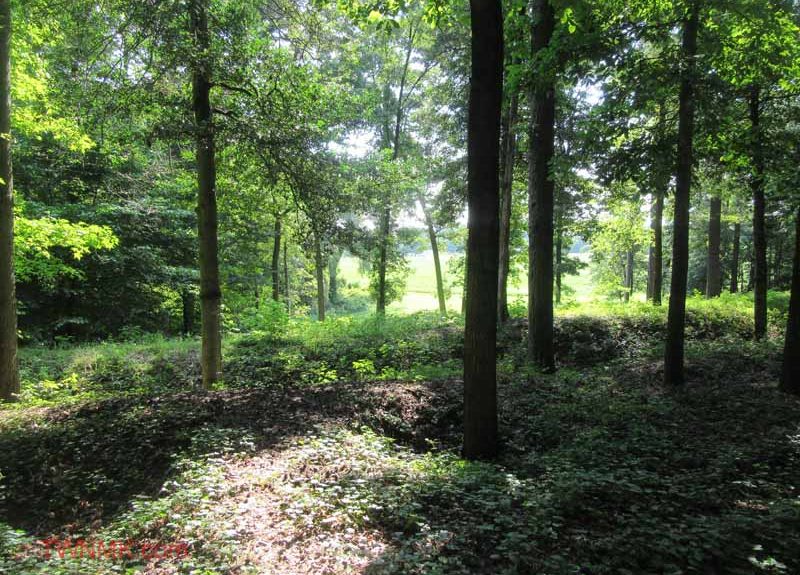
Much of the battlefield has been lost but part of it is preserved as a unit of the Richmond National Battlefield.