Close

The World Needs More Kevin

single page image

Petersburg

With a stalemate around Cold Harbor U.S. Grant had no room to maneuver anymore. Robert E. Lee had almost hemmed him in. For other generals they would have immediately sought help and safety but not Grant. Instead he devised an audacious plan that could win the war. Both sides had suffered heavy losses in the past month and a half and needed a break as both armies were played out. But Grant could not give Lee a break instead he needed to break Lee’s army.

Grant had spent the campaign fighting a battle and then moving to his left. He was up against the James River and couldn’t do so anymore so he left Cold Harbor and marched his army to the James River. Lee was puzzled and was unsure about what was going on. Grant’s engineers began constructing a pontoon bridge across the James on June 12. The bridge was 2,100 feet long, a marvel of engineering and Starting on June 14 Grant began crossing his army. It took four days to complete. In his crosshairs was Petersburg, a vital rail center just south of Richmond.

Guarding Petersburg was a small force under P.G.T. Beauregard. Lee was more concerned with Richmond, especially since it seemed inconceivable that Grant could get at Petersburg. Beauregard had about 10,000 men who were mostly too old or too young to serve in Lee’s army or had been discharged because of wounds. Benjamin Butler, leading the Union Army of the James had already tried to take Petersburg and had mostly faced only home guardsmen and reinforcements led by Beauregard from Richmond. While his assault inflicted heavy losses on the guardsmen he did not take Petersburg. Butler retreated to the Bermuda Hundred Peninsula and the Confederates bottled him up there.

With Grant arriving Butler was told to try again. He would be augmented by William Smith’s XVIII Corps which would give him 16,000 men. He was to assault the 5,500 men guarding Petersburg and Smith was in position on June 15 but he delayed his assault until 7 PM. His attack drove the Confederates back but with night coming on he decided to wait until dawn to continue. The way to Petersburg was open though but it would not stay that way. Confederate reinforcements were on their way as Robert Hoke’s Division and Bushrod Johnson’s Division were on their way from Butler’s front. Butler now could attack as well but did not. For a few brief hours the road to Richmond lay open but it was not taken advantage of.

By dawn on June 16 Beauregard had 14,000 men in the Petersburg defenses. Ambrose Burnside launched a series of uncoordinated attacks that day that were repulsed with ease. Beauregard pleaded with Lee for help but Lee had been ignoring him so far and when he didn’t he claimed his men were too fought out. Now he could not. On the morning of June 18 he put some of his men on the road to Petersburg. Another Union attack came that day and made large gains, taking the outer defenses. The only problem was that Beauregard had built a new defensive line to the rear and this new line forced a halt to the Union attack. Later that day the IX Corps and V Corps attacked as well and were repulsed. It was during this final assault that the 1st Maine Heavy Artillery lost 632 of the 900 men it brought into the battle, the heaviest loss of any single Union regiment in a single battle during the war.

Over four days of assaults the Union army lost about 11,400 men compared to the 4,000 Confederates. Grant and George Meade realized that assaulting fortifications was a waste of manpower so they now resolved to cut the rail lines going into Petersburg. The South Side and Weldon Railroads were the first to be targeted.

Jerusalem Plank Road

Union troops from the II Corps began probing toward the Weldon Railroad followed by the VI Corps. Near the Jerusalem Plank Road Confederates from William Mahone’s Division blocked the way with an entrenched line. During the movement a gap began to open up in the Union line and Mahone decided to attack. He was a pre-war railroad engineer and knew this area well as he had surveyed it and he knew of a ravine that would shield his men and used it to get into the rear of the II Corps. Two divisions collapsed and ran for the rear only stopping when they reached earthworks they had constructed the night before.

A second Union attempt was made the next day and found Mahone had pulled back. Troops from the VI Corps went to work tearing the railroad up and destroyed a half mile of track before they were chased away by Confederates. The battle was inconclusive as both sides had gained advantages. The Confederates still controlled the railroad but the Union had begun to stretch the siege lines to the west and had torn up some track putting the line out of commission for a few hours.

Deep Bottom

Grant was trying to stretch Lee’s lines to the breaking point. In late July Hancock’s II Corps was ordered to cross the James River and threaten Richmond. He was to pin the Confederates at Chaffin’s Bluff and an accompanying division of cavalry was to attack Richmond itself if the way was open. If possible an attack on the Virginia Central Railroad was also to be tried. It was at the least intended to be a diversion for the upcoming assault by Burnside on the Petersburg defenses.

Lee was quick to act when he found out and moved troops north to Richmond. Hancock’s attack on July 27 was stalled and the same thing happened the following day. When Grant determined that enough Confederates had been moved to Richmond the assaults were called off.

The Crater

Grant wanted to end the war and did not want a drawn-out siege. The previous summer he had tried to construct a mine to blow a hole in the Confederate defenses at Vicksburg. It had failed and he did not want to do it again as he believed it sapped the energy and morale of the men but he felt he had few alternatives so he tried again. It helped that a regiment in the IX Corps, the 48th Pennsylvania was made up of miners from Pennsylvania coal country. They knew their work. Digging began in late June and the mine was over 500 feet long when completed. It was packed with 8,000 pounds of gunpowder 20 feet underneath the Confederate lines. The Confederates were not oblivious to what was going on. They believed that a tunnel was being dug underneath their works and tried to find it but couldn’t.

To make the assault Edward Ferraro’s division made up of United States Colored Troops was selected to make the assault. They underwent special training and made mock assaults well behind the lines. They were to breach the Confederate lines and when they did the other IX Corps divisions would move in and widen the breach. George Meade lacked confidence in the plan but since Burnside had an independent command he could do nothing about it. He told Grant that if the assault failed the USCT would be slaughtered and the papers would say that they were slaughtered for no good reason. Grant agreed and ordered Burnside to choose another division to lead the assault. He had his three other division commanders draw lots and James Ledlie was the unlucky man. Ledlie was about as bad of a choice as could be made. He made no effort to brief his men on what was to be done and made little in the way of preparations.

On July 30 at about 4 AM the charges were lit. but there was no explosion. A miner went into the mine to find the fault and relit the fuse. He was perhaps the bravest man in all of the war. At 4:44 the charge exploded creating a 170 foot wide crater that was 80 feet long and 30 feet deep. The fortifications were destroyed and about 350 defenders killed instantly. From there things went wrong. Ledlie was not ready and it took 10 minutes to get his men moving. No ladders were provided to get out of the Crater so his men just milled about since they had no idea what their objective was. By then the Confederates had recovered and Ledlie’s men were sitting ducks and were cut down as they tried to retreat. Ferraro’s USCT were moved forward and many of his men were slaughtered as well. Eventually Grant realized that the attack would not succeed and stopped it.

He lost about 3,800 men, mostly from the USCT while the Confederates lost about 1,500. Ledlie was rumored to be drunk and was relieved as was Burnside. Grant was fed up with the IX Corp’s poor performance that had hampered his army since the Wilderness. John Parke assumed command and the corps was moved into the Army of the Potomac.

Second Deep Bottom

To try to relieve some of the pressure on Petersburg Robert E. Lee dispatched Jubal Early and his II Corps north on a raid into Maryland and Pennsylvania. Lee was concerned that Grant could bring overwhelming force against Early and sent reinforcements to bolster him. Grant misinterpreted this movement and believed that most of the strength around Richmond had moved off. He resolved to try another attack at Deep Bottom. Hancock’s II Corps was sent again and supplemented by David Birney’s X Corps and David Gregg’s cavalry division.

On August 14 Hancock made contact with the Confederate defenses and found the Confederates in more strength than supposed. The Union attacks made little gains but Lee became convinced that this was a serious attempt to take Richmond and moved more men away from Petersburg. On August 16 the Union attack made significant gains but because of the wooded terrain they did not know how advantageous of a position they occupied. A Confederate counterattack was easily repulsed two days later but Hancock was ordered to pull back on August 20 abandoning their gains.

Weldon Railroad (Ream’s Station)

With Hancock fighting outside of Richmond Grant proposed another move on the Weldon Railroad. Gouverneur Warren and his V Corps was given this task. On August 18 his men reached the railroad and set to work destroying it. The Confederates attacked that afternoon and drove his men back to near Globe Tavern but Warren counterattacked and regained all of his lost ground. Reinforcements soon arrived on both sides and the Confederates made a frontal assault on August 19 which was repulsed easily. Warren pulled back to the main Federal line on August 20 and the Confederates followed and attacked on August 21 but were repulsed with heavy losses.

While Warren had damaged the Weldon Railroad Grant wanted it out of action and Hancock’s II Corps was moved down to do the job. His men set to work destroying the tracks near Ream’s Station. This threatened Dinwiddie Court House and if that point was taken Lee might be forced to evacuate Petersburg. A.P. Hill was ordered to strike Hancock with about 10,000 men.

On August 25 Hill hit hard but was driven back. He tried again in the evening as Confederate cavalry swept around the Union flank. This time the Confederate attack was successful. Hancock’s corps was fought out and it broke and ran for the first time. This was also the first time in the war that Hancock’s corps lost cannon to the enemy but the Weldon Railroad was now useless. Supples coming in on the line had to be moved into wagons for transport, a most inefficient process. It had cost the Union about 7,000 men and the Confederates about 2,400 but Petersburg was being broken.

Fort Harrison and New Market Heights

In late September Butler’s Army of the James made an attempt to capture Richmond. His attack carried Fort Harrison on September 29 and held off Lee’s counterattacks the following day. With the fort lost Lee’s men constructed a new line of defenses. It should be noted that Fort Harrison was captured by an assault from the USCT in which 14 men would be awarded the Medal of Honor.

Peeble’s Farm

With Butler attacking Richmond Grant launched a new assault on Petersburg. This time John Parke’s IX Corps would lead the way. Two forts were captured on September 30 and the Federal line was extended to the west. Meade was content with these gains and called a stop to the offensive.

Boydton Plank Road

As before another thrust was made at Richmond to draw more of Lee’s men north of the James to hopefully made an attack south of the river easier. Hancock would lead men from three corps, about 30,000 men to try to take the South Side Railroad, the last rail line going into Petersburg. The movement began on October 27 and was attacked immediately near Burgess Mill. With Hancock’s II Corps isolated he ended the movement and returned to the main line. His wound from Gettysburg was causing a lot of pain and he resigned shortly thereafter.

Winter 1864-65

As with other winters of the war the armies settled down into winter quarters. Supply problems were taking their toll on the Confederates and many men were already on short rations. Not much went on for the Union as many soldiers were sent home on furlough as a reward for reenlisting. There may have been about 35,000 Union soldiers around Petersburg during the winter but Grant’s men had no such supply issues. He had established a port at City Point and a railroad line to line the rear to the front. His men were well supplied.

Hatcher’s Run

On February 5, 1865 Grant ordered another movement to the west. Andrew Humphreys, formerly the chief of staff of the army and new commander of the II Corps, led two divisions to near Armstrong Mills. He was to cover Warren who was tasked with intercepting Confederate supply wagons. John Gordon moved his corps to block and attempted to turn Humphrey’s right but was repulsed. Warren moved forward and was attacked by John Pegram’s Division and William Mahone’s Division near Dabney’s Mill and Hatcher’s Run. They stopped the Union advance but could not drive Warren back. The lines were continuing to head west and stretching the Confederates thin.

Fort Stedman

Lee knew he was in trouble. His lines were being stretched thin, almost too thin. His men were deserting in droves as they were short of supplies and troubles on the home front were wearing at them. He had about 50,000 men in the lines in total. Grant had 125,000 and also could count on about 50,000 more coming under the command of Phil Sheridan from the Valley. Lee needed a miracle.

John Gordon was not a man to sit around and let disaster come. He planned a surprise attack on the Union lines in the hope that it would force Grant to contract his own lines and to stop the assaults. Fort Stedman was selected as the weakest point in the Union line and Gordon was given nearly half of Lee’s infantry to make the attack.

At 4:15 AM on March 25 Gordon’s men went forward. Fort Stedman was quickly overrun and soon as well as 3 Union batteries on the siege lines. But now the attack bogged down. Nearby Fort Haskell opened fire and John Parke’s IX Corps moved in. John Hartranft’s division sealed the breach and by 7:30 AM the Confederates were sealed in but they had made it nearly to the railroad depot. At 7:45 Union artillery opened fire on Stedman and Hartranft counterattacked. The Confederates were driven back with heavy losses. Union attacks continued down the line and made smaller gains. Lee had to contract his lines and the end was near.

Stedman was a disaster for the Confederates. Lee lost about 4,000 men compared to the Union loss of about 1,000. He would never again take the offensive and his lines around Petersburg were doomed.

Five Forks and the Union breakthrough

Grant now planned for a final assault to break the lines and the entire army would take part. He needed to end the now 291-day long siege. Andrew Humphrey’s II Corps and Gouverneur Warren’s V Corps would make a move to the west to extend the Confederate lines past the breaking point. Phil Sheridan would include two of his cavalry divisions and would command the movement. Lee was sending reinforcements west to bolster his lines there as he could not lose that vital road network.

The objective was Five Forks, a road juncion where five roads came together. It controlled the South Side Railroad, the last supply line into Petersburg. If it fell the siege was over and probably the war as well. The Union movement began on March 29. The first fight was at Lewis’ Farm and Warren’s Corps drove the Confederates back. This gave them control of the Boydton Plank Road and a strong position to move on Five Forks.

Two days later Lee tried again to stop the Union movement at White Oak Road. Two divisions of Warren’s were thrown back but the Confederates had to withdraw when superior Union numbers threatened their flank. George Pickett’s Division was on its way to Five Forks to bolster the defenses but this action cut off communications from him. Pickett was almost on his own.

Sheridan seized Dinwiddie Court House on March 29 without a fight. He sent out cavalry patrols to seize Five Forks on March 30 and 31 but rain slowed the movement. Fitzhugh Lee (Robert E. Lee’s nephew) would not give up the junction without a fight and Pickett’s men took position on March 31. Together Lee and Pickett began to drive the Union cavalry back until darkness ended the fighting. They planned to continue the following day.

Warren heard the fighting from Dinwiddie and began to send infantry to support Sheridan and Meade ordered Warren to move his whole corps to help Sheridan that night. Grant notified Sheridan that a division was coming from Warren and should arrive by midnight. The problem was that Warren was not able to make that time. The rain slowed the march and with bridges out the march was difficult. Sheridan did not like Warren much and when midnight came and went he was steamed. The lead elements arrived around dawn.

Warren’s men then began marching towards Five Forks where he was to hit Pickett in the flank and rear near Dinwiddie. Warren moved too slowly for Sheridan’s liking and Pickett was able to pull back to Five Forks before being isolated. When he realized that Pickett had withdrawn Warren supervised the movement to pursue and was at the rear of the column trying to keep it moving. When Sheridan found out that Warren was not up front was furious.

Pickett’s men were back in Five Forks early in the morning of April 1. He believed that the attack would come on his left and Pickett’s widow claimed that he was ordered to hold the position at all costs. He requested that Lee make a diversion to help relieve the pressure on him. Lee did not.

Pickett’s position was terrible. It was in low ground with only pine logs for entrenchments. Lee’s cavalry could not operate effectively due to the wooded terrain and the use of only one road. His left was refused and he had about 10,000 men. The Confederate’s position was discovered by George Custer’s Union scouts and Sheridan moved to attack. Custer moved to attack with his division but could not find a weak spot but Union infantry was coming up.

Before attacking Sheridan had one order of business to attend to. He received permission from Grant to relieve Warren of command and have Charles Griffin take over if necessary. Sheridan planned a frontal attack with his cavalry while Warren would hit Pickett’s left. Warren would advance in a two division front with a third in reserve with about 12,000 men. Samuel Crawford and Charles Griffin’s divisions were first to arrive. They would advance to the north and wheel to the left but Getting into position took into the late hours of the afternoon and Sheridan did not think Warren was exerting enough control. When they got into position at 4 PM there was still 2 1/2 hours of daylight left.

On the Confederate side Thomas Rosser, who commanded a division of cavalry, had caught a large amount of shad from the Nottoway River and was preparing a feast. Lee and Pickett were invited and with all of the supply issues they were hungry. While there Lee was informed that Union cavalry had driven off the Confederate cavalry to the east and that they were now cut off. Confederate cavalry was sent out to investigate and report back. With Pickett and Fitzhugh Lee at the shad bake Rooney Lee (Robert E. Lee’s son) was the senior officer on the line and George Steuart was the senior infantry commander but neither were aware that they were in charge. Union forces were becoming visible and Fitzhugh Lee was sent for but his aide could not find him.

The Union attack came at 4:15 PM. Romeyn Ayres’ division attacked first and overran the Confederate earthworks but his men were alone. The other two divisions were marching to the north. Warren tried to bring them back and again Sheridan became furious with Warren. Crawford’s division emerged west of the Confederate line and missed it entirely. When Crawford was located he was led to the attack. Griffin soon followed. They quickly overwhelmed the Confederate left and many Confederates threw down their arms and surrendered. A third Confederate line was formed and it was again overwhelmed. Union cavalry moved in and the rout was complete. Three Confederate cannons tried to slow the cavalry but were overrun too. Custer pursued until darkness set in.

Five Forks was a total route. The Union had lost about 800 men and the Confederates had lost about 3,000. The South Side Railroad was in Union hands and the Siege of Petersburg was all but over. For Warren though the war was over. Sheridan relieved him of command and elevated Charles Griffin in his place. Warren would fight it for the remainder of his life as he tried to restore his reputation. A court of inquiry would rule that he was relieved unjustly but by then Warren was dead.

With Five Forks taken Grant ordered an assault all along the Union line for dawn on April 2. Lee knew the game was nearly up and Richmond needed to be prepared for evacuation. Petersburg had to be held until the evacuation could be completed. As many soldiers as could be spared were moved from the Richmond defenses to Petersburg. Grant ordered an artillery barrage to open at 10 PM on April 1. The Union assault would take place at 4:30 AM.

The plan was for Humprey’s II Corps, Wright’s VI Corps, Parke’s IX Corps and Edward Ord’s Army of the James to seize the Confederate trenches and move into Petersburg. Wright’s men were the first to breakthrough against the undermanned Confederates. His 14,000 men quickly overwhelmed the defenders with a giant wedge formation when they went forward at 4:40 AM. At about 5:30 AM A.P. Hill was meeting with Lee and rode off to return to his men. He was spotted by two Union stragglers along the Boydton Plank Road who shot him. The Confederate line was breaking apart. Parke’s men also broke through quickly seizing Confederate forts and batteries. The fighting here was hand-to-hand and his corps staved off two Confederate counterattacks.
Confederate Evacuation

Two forts blocked the Boydton Plank Road, Forts Gregg and Whitworth. Confederate soldiers were moved here and ordered to hold back the Union to buy time. That they did. Fort Gregg held off four assaults before being overwhelmed. It allowed time for the Confederates to form a new line but the end was here. Lee ordered the evacuation of Richmond. Jefferson Davis was alerted during Sunday services and soon Richmond became abuzz. The archives and treasury were loaded on trains and sent to Danville. Storehouses were opened up for the public to take what they wanted, lest it fall into Union hands. The government boarded trains out of the city. The end was here.

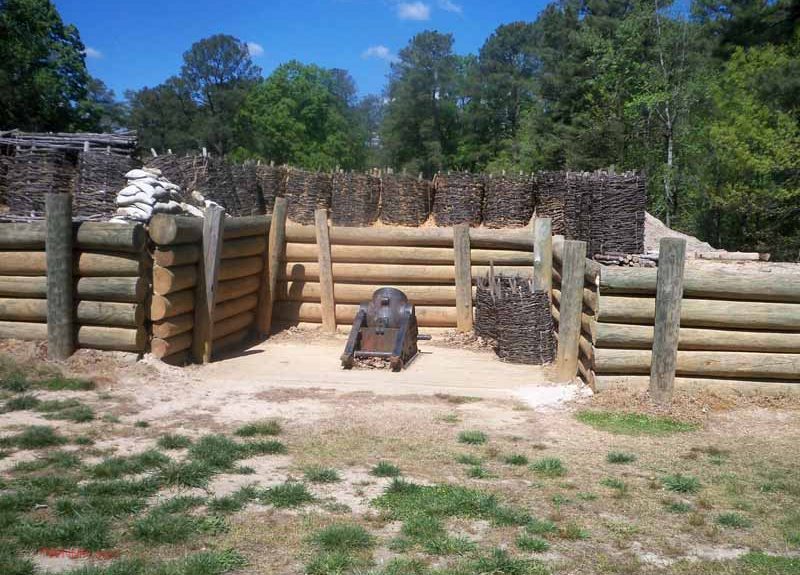
Much of Petersburg today is preserved as a part of Petersburg National Battlefield and the units that make it up like City Point and the Eastern Front. Some of the smaller battlefields are preserved as county parks or with nothing more than a wayside marker.