Close

The World Needs More Kevin

single page image

Cedar Creek

With the campaigning season coming to and end and Jubal Early’s Confederate army seemingly out of the picture Phil Sheridan went to Washington to confer with U.S. Grant about how to best use his men to end the war. The end was finally in sight. The Shenandoah Valley was a wasteland and the fertile farmland was of no use for the Confederacy. Along with Sherman’s capture of Atlanta, Grant’s vision was finally bearing fruit.

Jubal Early knew that time was running out. His army was reinforced by Joseph Kershaw’s Division and he formulated an offensive. Sheridan had withdrawn down the Valley following the Burning and his army was encamped near Cedar Creek. They were not expecting an attack as no defensive works were erected and this was the opportunity Early was looking for. There had been a brief fight near Hupp’s Hill but Sheridan was not worried even though his signalmen were reading Confederate wig-wag signals that said that James Longstreet’s Corps was coming. This was a deliberate attempt by Early to spread disinformation and Sheridan did not take the bait.

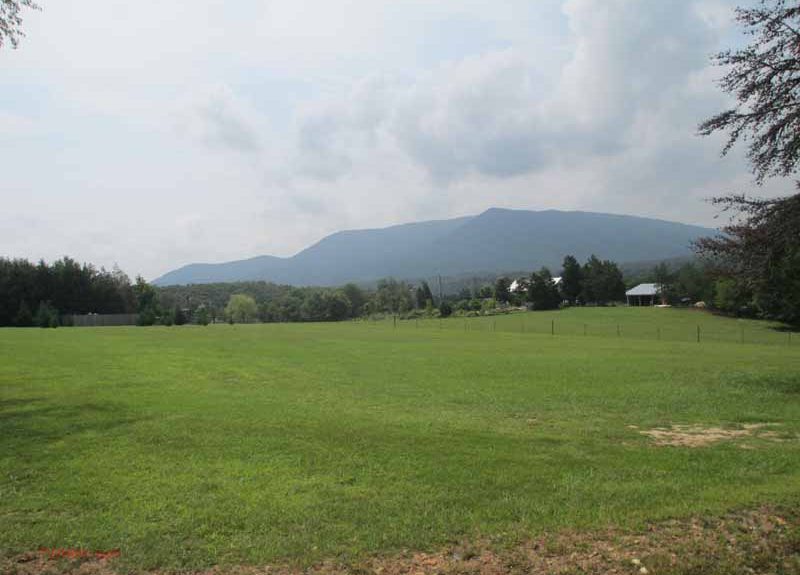
Early now had one option, he had to attack and he believed that he found an opening to get at Sheridan’s men. John Gordon, one of his senior commanders, got up onto Masanutten Mountain overlooking the Federal position and knew that an attack could be successful, as long as they achieved surprise. The Union position, anchored on the vulnerable left by George Crook’s Army of West Virginia, relied on natural obstacles to dissuade attacks. If the Confederates could get in close they could render those obstacles moot.

That is exactly what Early did and he began to move his 21,000 men towards the Union position. Gordon led his men on a single-file dirt path that took them right up against Crook’s men after a night march. Sheridan himself was in Winchester returning from the conference with Grant and Horatio Wright was in command.

As dawn approached the Confederates attacked through a foggy morning and their surprise was complete. At 5 AM Crook’s men were caught unprepared and fled in panic. William Emory’s XIX Corps moved to defend themselves but uncovered the bridge over Cedar Creek. This corps was also driven back but pockets of resistance slowed the Confederate attack near the Belle Grove Plantation. It was well that they did. Horatio Wright and his VI Corps was moving into position on high ground north of Belle Grove.

Wright’s men got into position and Union cavalry formed on their right. Kershaw’s Division moved forward to attack Wright around 7 AM along with Gordon’s Division and Wright was forced back to Cemetery Hill near Middletown. George Getty’s division of Wright’s corps held this position for over an hour and their staunch defense convinced Early that he was now fighting the entire VI Corps, one of the Union army’s most veteran outfit. He decided to bring up his artillery and eventually pounded Getty’s division out of its position after about 30 minutes.

Thing would get worse for Early. Phil Sheridan was on his way. He was alerted to the sounds of fighting around 6 AM but he had dismissed the reports as just his men practicing. By 9 AM he had saddled up his horse Rienzi and rode towards the battlefield. Along the route he rallied stragglers and arrived on the battlefield at 10:30 AM. He found Wright organizing a defensive line and no Confederate attack coming.

Why? Early’s men were busy raiding Union camps looking for something to eat. Up to this point he had won a great victory capturing near 1,300 prisoners and 24 cannon all the while driving 7 Union infantry divisions back. He needed to reorganize his lines and ordered a halt. This “Fateful Halt” was just what the Union needed and his men were back in line by 1 PM. Gordon was ordered to attack the Union line and his attack was repulsed easily.

Now it was Sheridan’s turn to go on the offensive. A division of cavalry was sent to either flank and at 4 PM Sheridan’s army moved forward. After an hour of fighting Early’s left crumbled and Union cavalry led by George Custer moved in and now it was Early’s men’s time to flee in panic. With Early’s line breaking Sheridan stepped up the pressure and Early’s line collapsed. One of the up-and-coming officers in the Confederate army, Stephen Ramsuer, was mortally wounded during this phase and later died at Belle Grove surrounded by Union officers who had been classmates at West Point. During the retreat a bridge collapsed preventing any wheeled vehicle from continuing on so Sheridan was able to reclaim all of his lost cannon as well as most of Early’s.

Sheridan lost about 5,600 while Early lost about 2,900 but Sheridan had won the battle. Early’s career was over. Most of the soldiers under his command were recalled to Richmond to help deal with U.S. Grant so Sheridan was now free to roam the Valley and after spending the winter would move in for the final kill at Appomattox. For Sheridan his famous ride from Winchester became an instant sensation and it was the final nail in the coffin for any hope of a Democrat victory in the presidential election. Sheridan’s ride is immortalized with a statue in his hometown of Somerset, Ohio. Much of the battlefield is preserved as a part of Cedar Creek and Belle Grove National Historic Park.

By the way, who said poetry was boring? Certainly not Thomas Buchanan Reed. His poem Sheridan’s Ride was an instant hit in the North:


Up from the South, at break of day,
Bringing to Winchester fresh dismay,
The affrighted air with a shudder bore,
Like a herald in haste to the chieftain’s door,
The terrible grumble, and rumble, and roar,
Telling the battle was on once more,
And Sheridan twenty miles away.

And wider still those billows of war
Thundered along the horizon’s bar;
And louder yet into Winchester rolled
The roar of that red sea uncontrolled,
Making the blood of the listener cold,
As he thought of the stake in that fiery fray,
With Sheridan twenty miles away.

But there is a road from Winchester town,
A good, broad highway leading down:
And there, through the flush of the morning light,
A steed as black as the steeds of night
Was seen to pass, as with eagle flight;
As if he knew the terrible need,
He stretched away with his utmost speed.
Hills rose and fell, but his heart was gay,
With Sheridan fifteen miles away.

Still sprang from those swift hoofs, thundering south,
The dust like smoke from the cannon’s mouth,
Or the trail of a comet, sweeping faster and faster,
Foreboding to traitors the doom of disaster.
The heart of the steed and the heart of the master
Were beating like prisoners assaulting their walls,
Impatient to be where the battle-field calls;
Every nerve of the charger was strained to full play,
With Sheridan only ten miles away.

Under his spurning feet, the road
Like an arrowy Alpine river flowed,
And the landscape sped away behind
Like an ocean flying before the wind;
And the steed, like a barque fed with furnace ire,
Swept on, with his wild eye full of fire;
But, lo! he is nearing his heart’s desire;
He is snuffing the smoke of the roaring fray,
With Sheridan only five miles away.

The first that the general saw were the groups
Of stragglers, and then the retreating troops;
What was to be done? what to do?–a glance told him both.
Then striking his spurs with a terrible oath,
He dashed down the line, ‘mid a storm of huzzas,
And the wave of retreat checked its course there, because
The sight of the master compelled it to pause.
With foam and with dust the black charger was gray;
By the flash of his eye, and his red nostril’s play,
He seemed to the whole great army to say:
“I have brought you Sheridan all the way
From Winchester down to save the day.”

Hurrah! hurrah for Sheridan!
Hurrah! hurrah for horse and man!
And when their statues are placed on high
Under the dome of the Union sky,
The American soldier’s Temple of Fame,
There, with the glorious general’s name,
Be it said, in letters both bold and bright:
“Here is the steed that saved the day
By carrying Sheridan into the fight,
From Winchester–twenty miles away!”