Ninety-Six is one of the oddest names in American military history. How exactly did this place get the name Ninety-Six? No one really knows, not even the National Park Service. Their best guess was that it was 96 miles from a major Cherokee trading center. and there are plenty of other theories as well. 96 was an important trade center in Colonial times and was a Loyalist stronghold in upstate South Carolina.
The Revolution brought fighting here almost as soon as the war began. The first fighting in the South occurred here in 1775 when Colonial militia was ambushed by the Cherokee and Loyalists here and the first Colonial death outside of New England occurred during that fight. This was known as the Battle of Twelve Mile Creek.
It is more famous for what happened in May and June 1781. Nathanael Greene and about 1,000 soldiers came to lay siege to the town. The town had a population of about 100 and was heavily fortified and it was a refuge for Loyalists in the area, mostly of Scotch-Irish decent. About 500 Loyalists defended the village.
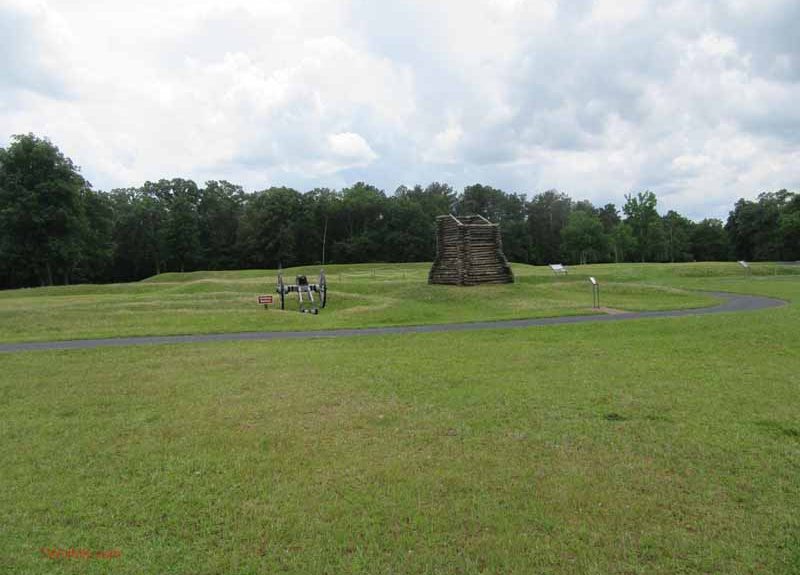
The siege lasted for 28 days and centered on the Star Fort. Greene’s men dug parallels and was able to get his artillery close. A tower was constructed for his sharpshooters to pick off the Loyalists in the fort. His men even shot hot arrows into the fort to try to set anything they could on fire. A mine was started to try to blow the fort up but was never completed because word of a relief column of 2,000 men coming under Lord Rawdon was enough for Greene to abort the attempt. He made one attempt to storm the fort, which failed, and abandoned the siege.
Greene lost about 150 men, the Loyalists about 100. Greene left and began a retreat toward Charlotte. The Loyalist forces merged and began pursuing his. They also abandoned the town and burned it. The pursuit did not last long and they began heading toward Charleston. Greene pursued and fought the final battle of the Southern Campaign outside of Charleston in September. The Loyalists were allowed to leave and were resettled by the crown in Nova Scotia.
The site of the siege is preserved as a part of Ninety-Six National Historic Site.