The shot heard round the world. The shots that began the decline of the British Empire. The shots that resulted in the end of years of British tyranny. Don’t know if you believe that or not but on Lexington Green the American Revolution began. You could say our nation was born here.
Lexington and Concord
Lexington
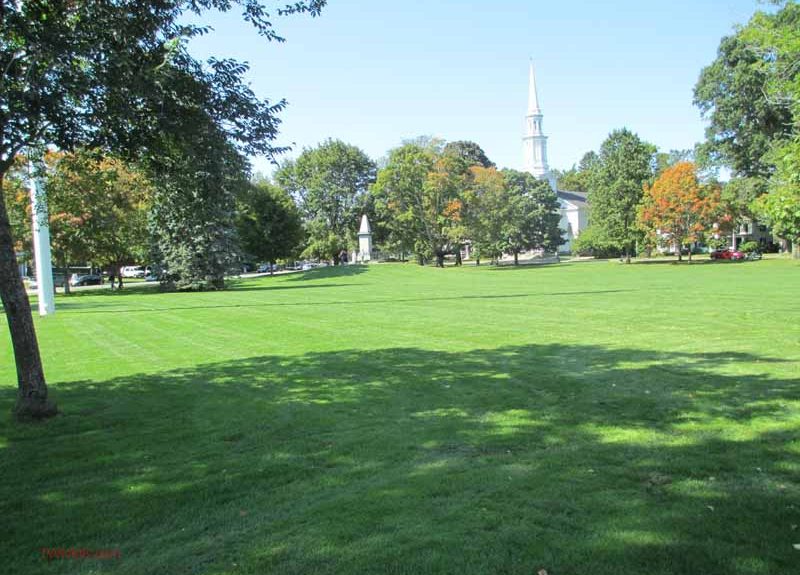
A beautiful day when I visited. It was here that the first shots of the Revolution were fired. After years of British occupation and various usurpations events finally came to a head. Of course the British army was just trying to take the arms that belonged to a potential set of rebels. The British soldiers had been up since 2:30 AM so that they could arrive in Lexington at an early hour. Not really much happened here and no one still knows who fired the first shot but the fighting here was over in a few minutes. The disciplined British army easily won around daybreak on April 19, 1775.
Concord
It did not get easier for the British. Now the column moved towards Concord to gather another suspected cache of arms. Minutemen from all around began moving toward the North Bridge, a small bridge over the Concord River. About 100 British soldiers and 400 Minutemen began exchanging fire around 11:00 AM. The Colonists were stunned, they had defeated a force of British regulars and turned them back. The Colonists fell back to the hill overlooking the bridge and the British resumed searching for the arms, eventually stopped and ate lunch and the began the march back to Boston.
Return to Boston
The delay to eat lunch allowed for the Colonial force to swell to about 1,000, which now outnumbered the British. The Colonists followed them and exchanged sporadic fire with the King’s men until near Meriam’s Corner when they closed to within close musket range and killed several soldiers. About 500 Minutemen assembled on Brooks Hill and began inflicting heavy losses on the British, again at Lincoln and then catching the British army in a crossfire at the Bloody Angle. At every rise of the ground like Parker’s Revenge or the Bluff or bend in the road they came under attack. This continued on until the British upped the speed of the march to a trot and put some distance between themselves and the Colonists. About 1,000 more British soldiers with artillery dispatched by General Gage in Boston covered their retreat at about 2:30 PM as they neared Lexington.
They had stirred up a hornet’s nest with nearly 2,000 Colonists joining the fight. British soldiers were frustrated that the Colonists did not come out into the open and fight a European-style battle. The British retreated into Boston and the city would be surrounded by around 15,000 militiamen by the next day. The Revolution had begun. The Colonists suffered about 100 casualties and the British suffered around 300. Today much of the ground is preserved as a part of Minuteman National Historic Site.