A peace treaty was signed with the British but they were in no hurry to leave the Ohio Country. For many of the Native people they were not a party to the treaty and they refused to comply with that. Since the British were in alliance with several tribes they remained to honor their alliance. The Treaty of Fort Stanwix in 1768 had set aside land for the Native peoples but one article in the Treaty of Paris stated that the British agreed to cede their land to the Americans. As the Natives had no representation in the treaty they wanted no part of it. For the Americans, they had defeated the British and therefore believed that they could set the terms. This set the nation up for another conflict that would lead to the final battle of the Revolution.
The Natives formed the Western Confederacy to defend their rights. They won several small victories over poorly led militia and US Army forces. President George Washington was alarmed, and while he believed that the settlers were as much to blame for the violence as the Natives, he took steps to counter it. Anthony Wayne was ordered to build an army and head west to crush the Western Confederacy. He had the time he needed to build a disciplined force since peace negotiations were ongoing in 1793.
Some Native chiefs wanted simply a return to the Treaty of Fort Stanwix, some wanted a compromise and others wanted no part in negotiation. As American settlers pushed west the Native were ceding more and more land. What became known as Little Turtle’s War began and the Native tribes were successful at first when they faced poorly disciplined frontier militias. By 1794 though Anthony Wayne and 5,000 trained soldiers were coming.
Wayne built a series of forts along the way and by the time he reached the Maumee River near modern Toledo he had about 2,000 men under his command. Chief Little Turtle placed his warriors where a stand of trees had recently been blown down during a storm, or fallen timbers. There were about 1,500 warriors and a nearby British outpost, Fort Miami was supplying them. A company of Canadians were also present.
Wayne got his men up close and pressed his attack with the bayonet and the battle was over quickly. The warriors fled to Fort Miami only to find the gates closed and the British commander refusing to assist which would start a war with the US. Wayne spent the next few days destroying villages and crops and then withdrew. He had lost about 130 men while Native losses are unknown.
The victory emboldened American negotiator John Jay to bring about the withdraw of the British from American territory. Peace was also negotiated with the Natives and Ohio was opened up to settlement. Wayne constructed a series of forts all along the Maumee River, one today, Fort Wayne bears his name in Indiana.
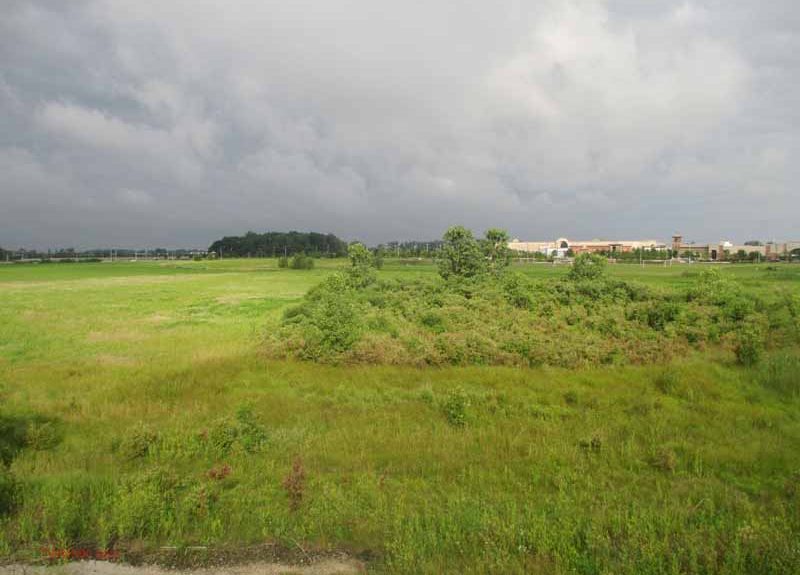
Peace with the Natives would last until 1811 when Tecumseh, who fought at Fallen Timbers, would lead the next war against the US. What remains of the battlefield is preserved as a part of the Toledo Metropark system and as Fallen Timbers Battlefield National Historic Site which also included the remains of Fort Miami. Another fort, Fort Meigs across the Maumee River is also preserved as a private museum.