Camden was well known as a hub in South Carolina even before Hortatio Gates had his army wrecked there. Being a stretegic center both armies sought to control it and once again fighting returned to the town. Nathanael Green had just finishing giving Charles Cornwallis a bloody nose at Guilford Court House and while Cornwallis was the victor there Greene wanted to get him to pursue him. To give Cornwallis incentives Greene began threatening small garrisons of British troops in South Carolina.
Cornwallis was not in any shape to pursue and was already headed to Wilmington, North Carolina in search of supplies. So Greene stopped threatening the garrisons and began attacking them to try to force them back to Charleston thereby ceding the colony to the Colonials.
Greene had about 1,500 men and decided to strike at the heart of British control in the colony in Camden. He was hoping to be aided by militia and had detached some of his men to aid Francis Marion in keeping British forces otherwise occupied pursuing his small force so they would not join the main British defense effort.
In Camden Lord Francis Rawdon had at his disposal 3 regiments, parts of two others and a small detachment of cavalry. The town was fortified by a ring of redoubts that covered the northern approaches. Rawdon was already ready for Greene as the element of surprise had been lost even before Greene arrived on April 20.
Greene realized quickly that Rawdon’s defenses were too strong to storm and encamped his army about a mile and a half away on Hobkirk’s Hill to block the Great Waxhaw Road. He didn’t have sufficient force to attack but he did hope to draw Rawdon into an attack. He could not dally though, he received word that 400 British soldiers were heading to Camden to reinforce Rawdon. He sent a miltia force to block the road from Charlestown but the artillery was unable to get through the marshy terrain and the force was recalled.
Rawdon had his own concerns, particularly of Marion joining Greene and realized he needed to do something. He had his chance he believed when a Colonial deserter told them that Greene’s artillery was miles away. It was time to attack. The deserter was under the impression that the artillery had gone with the miltia to block the road and was unaware that it had returned.
Rawdon formed 900 men in the morning and began advancing around 11 AM. The Colonial troops were busy washing their dishes and clothes but the pickets were alert and opened fire. Rawdon’s men forced the pickets back and they emerged from the woods to find Greene’s men waiting for them. Greene also sent his cavalry under William Washington around the British flank.
To Rawdon’s surprise his men came under artillery attack and he began taking heavy casualties but his men’s discipline held their formations. Greene had committed all of his reserves in the center to stop the attack with the bayonet. The Colonial left flank though began to fall apart when the 5th Maryland’s commander was killed and the regiment began to break apart. The rest of the Colonial line began to break up and retreat.
Washington was able to get into the British supply train in the rear taking prisoners but was never able to engage. His cavalry was able to assist some Maryland infantrymen in saving Greene’s three cannon.
The retreat did not last long. Rawdon quickly pulled back to Camden leaving only a company of dragoons to hold Hobkirk’s Hill. Greene returned later that day and surprised the dragoons and reoccupied the ground. Rawdon would be forced to abandon Camden on May 9 due to threats from Greene as well as Marion and Thomas Sumter’s militia forces.
One witness to the battle was a young Andrew Jackson, who was being held in the town jail for refusing to shine a British officer’s boots.
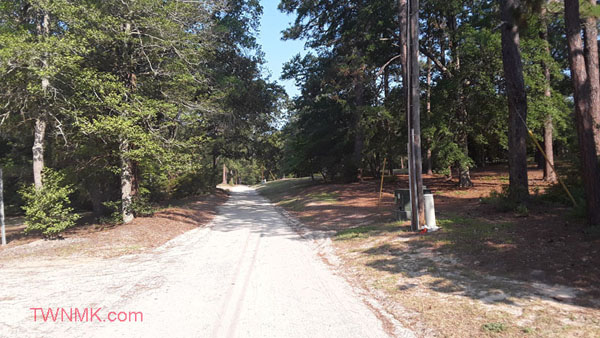
For the numbers engaged in the battle the casualties were high. Greene lost about 270 men and Rawdon lost about 260 men. Little remains of the battlefield today though a few wayside markers mark the battle in a residential neighborhood that now occupies the hill. A small monument was also dedicated to commemorate the battle.