Five Forks and the Union breakthrough
Grant now planned for a final assault to break the lines and the entire army would take part. He needed to end the now 291-day long siege. Andrew Humphrey’s II Corps and Gouverneur Warren’s V Corps would make a move to the west to extend the Confederate lines past the breaking point. Phil Sheridan would include two of his cavalry divisions and would command the movement. Lee was sending reinforcements west to bolster his lines there as he could not lose that vital road network.
The objective was Five Forks, a road juncion where five roads came together. It controlled the South Side Railroad, the last supply line into Petersburg. If it fell the siege was over and probably the war as well. The Union movement began on March 29. The first fight was at Lewis’ Farm and Warren’s Corps drove the Confederates back. This gave them control of the Boydton Plank Road and a strong position to move on Five Forks.
Two days later Lee tried again to stop the Union movement at White Oak Road. Two divisions of Warren’s were thrown back but the Confederates had to withdraw when superior Union numbers threatened their flank. George Pickett’s Division was on its way to Five Forks to bolster the defenses but this action cut off communications from him. Pickett was almost on his own.
Sheridan seized Dinwiddie Court House on March 29 without a fight. He sent out cavalry patrols to seize Five Forks on March 30 and 31 but rain slowed the movement. Fitzhugh Lee (Robert E. Lee’s nephew) would not give up the junction without a fight and Pickett’s men took position on March 31. Together Lee and Pickett began to drive the Union cavalry back until darkness ended the fighting. They planned to continue the following day.
Warren heard the fighting from Dinwiddie and began to send infantry to support Sheridan and Meade ordered Warren to move his whole corps to help Sheridan that night. Grant notified Sheridan that a division was coming from Warren and should arrive by midnight. The problem was that Warren was not able to make that time. The rain slowed the march and with bridges out the march was difficult. Sheridan did not like Warren much and when midnight came and went he was steamed. The lead elements arrived around dawn.
Warren’s men then began marching towards Five Forks where he was to hit Pickett in the flank and rear near Dinwiddie. Warren moved too slowly for Sheridan’s liking and Pickett was able to pull back to Five Forks before being isolated. When he realized that Pickett had withdrawn Warren supervised the movement to pursue and was at the rear of the column trying to keep it moving. When Sheridan found out that Warren was not up front was furious.
Pickett’s men were back in Five Forks early in the morning of April 1. He believed that the attack would come on his left and Pickett’s widow claimed that he was ordered to hold the position at all costs. He requested that Lee make a diversion to help relieve the pressure on him. Lee did not.
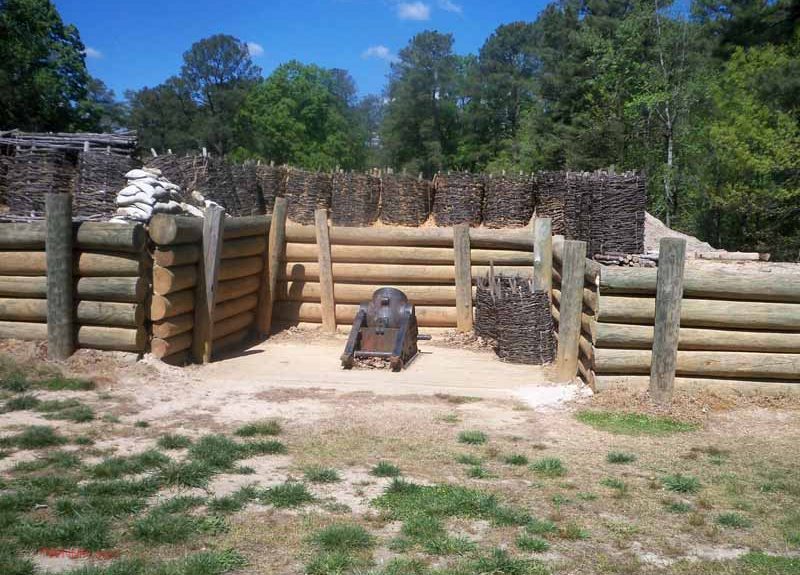
Pickett’s position was terrible. It was in low ground with only pine logs for entrenchments. Lee’s cavalry could not operate effectively due to the wooded terrain and the use of only one road. His left was refused and he had about 10,000 men. The Confederate’s position was discovered by George Custer’s Union scouts and Sheridan moved to attack. Custer moved to attack with his division but could not find a weak spot but Union infantry was coming up.
Before attacking Sheridan had one order of business to attend to. He received permission from Grant to relieve Warren of command and have Charles Griffin take over if necessary. Sheridan planned a frontal attack with his cavalry while Warren would hit Pickett’s left. Warren would advance in a two division front with a third in reserve with about 12,000 men. Samuel Crawford and Charles Griffin’s divisions were first to arrive. They would advance to the north and wheel to the left but Getting into position took into the late hours of the afternoon and Sheridan did not think Warren was exerting enough control. When they got into position at 4 PM there was still 2 1/2 hours of daylight left.
On the Confederate side Thomas Rosser, who commanded a division of cavalry, had caught a large amount of shad from the Nottoway River and was preparing a feast. Lee and Pickett were invited and with all of the supply issues they were hungry. While there Lee was informed that Union cavalry had driven off the Confederate cavalry to the east and that they were now cut off. Confederate cavalry was sent out to investigate and report back. With Pickett and Fitzhugh Lee at the shad bake Rooney Lee (Robert E. Lee’s son) was the senior officer on the line and George Steuart was the senior infantry commander but neither were aware that they were in charge. Union forces were becoming visible and Fitzhugh Lee was sent for but his aide could not find him.
The Union attack came at 4:15 PM. Romeyn Ayres’ division attacked first and overran the Confederate earthworks but his men were alone. The other two divisions were marching to the north. Warren tried to bring them back and again Sheridan became furious with Warren. Crawford’s division emerged west of the Confederate line and missed it entirely. When Crawford was located he was led to the attack. Griffin soon followed. They quickly overwhelmed the Confederate left and many Confederates threw down their arms and surrendered. A third Confederate line was formed and it was again overwhelmed. Union cavalry moved in and the rout was complete. Three Confederate cannons tried to slow the cavalry but were overrun too. Custer pursued until darkness set in.
Five Forks was a total route. The Union had lost about 800 men and the Confederates had lost about 3,000. The South Side Railroad was in Union hands and the Siege of Petersburg was all but over. For Warren though the war was over. Sheridan relieved him of command and elevated Charles Griffin in his place. Warren would fight it for the remainder of his life as he tried to restore his reputation. A court of inquiry would rule that he was relieved unjustly but by then Warren was dead.
With Five Forks taken Grant ordered an assault all along the Union line for dawn on April 2. Lee knew the game was nearly up and Richmond needed to be prepared for evacuation. Petersburg had to be held until the evacuation could be completed. As many soldiers as could be spared were moved from the Richmond defenses to Petersburg. Grant ordered an artillery barrage to open at 10 PM on April 1. The Union assault would take place at 4:30 AM.
The plan was for Humprey’s II Corps, Wright’s VI Corps, Parke’s IX Corps and Edward Ord’s Army of the James to seize the Confederate trenches and move into Petersburg. Wright’s men were the first to breakthrough against the undermanned Confederates. His 14,000 men quickly overwhelmed the defenders with a giant wedge formation when they went forward at 4:40 AM. At about 5:30 AM A.P. Hill was meeting with Lee and rode off to return to his men. He was spotted by two Union stragglers along the Boydton Plank Road who shot him. The Confederate line was breaking apart. Parke’s men also broke through quickly seizing Confederate forts and batteries. The fighting here was hand-to-hand and his corps staved off two Confederate counterattacks.