British recruiting efforts in the southern Colonies were strong. With Charles Cornwallis and his army in Charlotte Major Patrick Ferguson was sent to recruit in the South Carolina backcountry. Things were not going well for the Colonial cause in the South until the Colonials had won a small victory at Musgrove’s Mill in South Carolina but Ferguson was coming with the small army he had raised to end Colonial resistance.
In a meeting North Carolina militia leaders Isaac Shelby and John Sevier agreed to combine their commands and fight Ferguson. Other militiamen from Virginia and Tennessee also joined in and rendezvoused at Sycamore Shoals on September 25, 1780. They crossed the mountains into North Carolina at about 1,400 strong.
Ferguson knew they were coming and began retreating toward Cornwallis. Ferguson made camp on Kings Mountain on October 6 and Cornwallis and safety was one day away so the militia would have to hurry. After marching through rain the militia arrived the following day and immediately attacked at around 3 PM. Ferguson was unaware they had arrived and was caught completely by surprise.
No command existed during the battle on the Colonial side. The militia fought their own battle “Indian style” as they fought their way up the mountain. When the militia would get up the hill Ferguson would order a bayonet charge and drive them back down. This continued on for about an hour. Loyalist casualties were mounting and despite being on the high ground they were unable to shoot downhill effectively. Ferguson was caught away from his men and was ordered to surrender. He refused and the militia men shot him dead and with his death some Loyalists began to surrender.
For the militia they remembered the Battle of Waxhaws where the British showed no quarter to surrendering soldiers. For a brief time the militia showed no quarter but then cooler heads prevailed and their leaders were able to exert control. The battle lasted a little over an hour and in that time the Loyalists lost 450 men along with about 670 men surrendering. The militia lost about 100. Only one British person was present, Ferguson, who was killed. Some of the Loyalists were even dressed in red uniforms.
The militia executed some Loyalists on charges of treason and desertion and it was only put a stop to by an impassioned plea for mercy by the owner of the land’s wife. Most of the Colonial force then simply dispersed after the battle, allowing some of the prisoners to escape. After the defeats preceding this battle this was a huge boost to morale and it caused Cornwallis to cancel his plans to invade North Carolina and instead retreat to South Carolina.
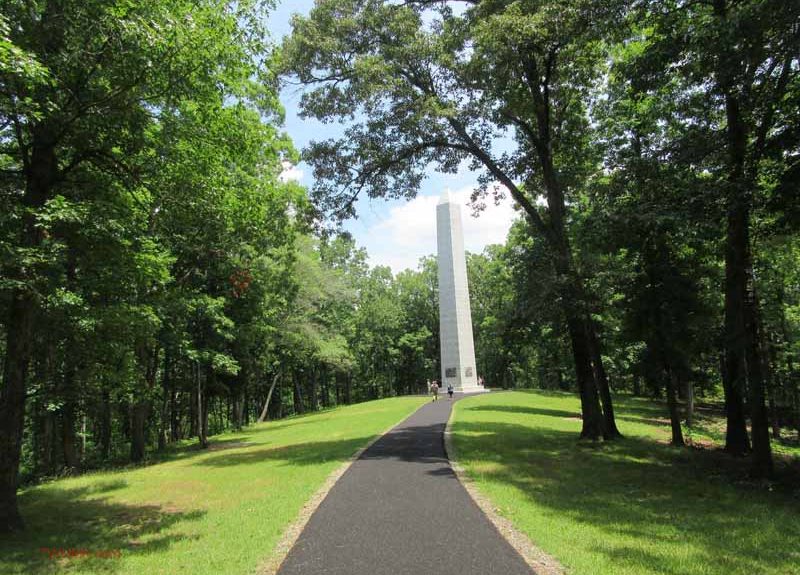
The battlefield is preserved as King’s Mountain National Military Park.