Massachusetts was not the only hotbed of activity in the early days of the Revolution. With the outbreak of fighting both Loyalists and Colonials began growing their numbers all over the Colonies. Many of the Loyalists were Scottish settlers and believed that the Colonials were corrupt and could not to be trusted. Several Loyalist leaders began to recruit these settlers to the Crown and they would become part of the Royal Highland Emigrant Regiment. Two veterans of the fighting around Boston, Donald MacLeod and Donald MacDonald were sent south to begin recruiting, unaware that an effort was already on-going.
A southern campaign to be led by Henry Clinton was being planned for mid-February and word was sent for these new recruits to be on the coast near Wilmington by then. They raised about 3,500 men but some began deserting almost immediately. They had expected to be met by British regulars and escorted to the coast and did not relish the thought of having to fight their way there. Finally about 1,500 men led by MacDonald began the march to the coast on February 18.
About the same number of Colonists opposed them, led mostly by James Moore and Richard Caswell. Moore blocked the march and MacDonald diverted to another road that crossed over Moore’s Creek. Moore anticipated that and detached about 150 men to take up position guarding the bridge over the creek and Caswell and his men arrived a few hours before MacDonald’s men. MacDonald sent an envoy to seek Caswell’s surrender and to observe their defenses. While surrender was refused the envoy got a glimpse of the defenses and believed his side had the advantage. These defenses were to the west of the creek with the only avenue of escape being the narrow bridge. MacDonald decided to attack but Caswell had a surprise for him.
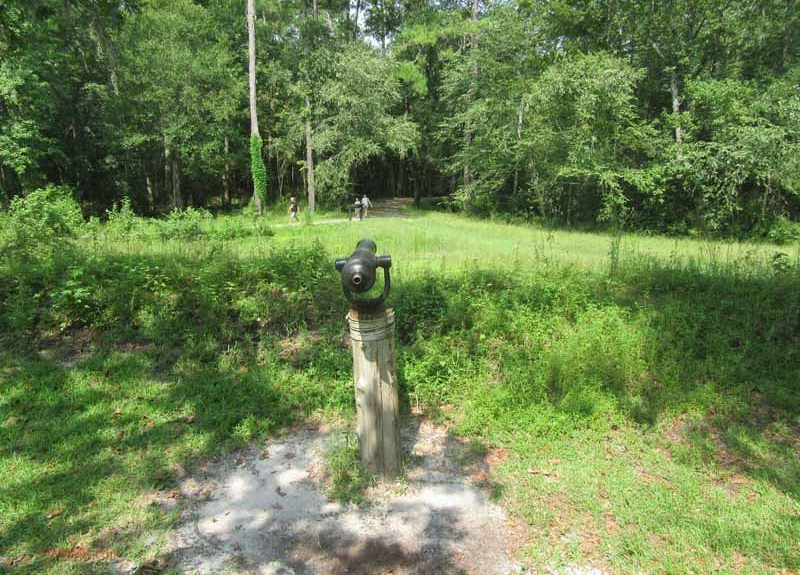
During the night Caswell pulled his men back to the other side of the creek and entrenched that position. The planking on the bridge was taken up and the rails were greased. Caswell had at his disposal two pieces of artillery, a field cannon and a swivel gun known as Mother Covington and Mother Covington’s Daughter. Overnight MacDonald fell ill and turned command over to MacLeod, who took the offensive at 1 AM and arrived at the bridge in the pre-dawn hours. He wanted to wait until daylight but his men were spotted and he ordered the attack.
When the Scots got to within 30 paces of the earthworks the Colonists opened fire. The Scots were armed only with swords and stood no chance. MacLeod was killed and what was left of his force dissolved. The Loyalists lost an estimated 50 men and the Colonists lost 2 men. The battle, if you can call it that, was over in about 2 minutes. Around 850 Loyalists were mopped up after the battle and numerous weapons were seized along with thousands of dollars worth of Spanish gold. Despite their fears the Loyalist prisoners were well treated and this prompted many of them to never take up arms again, even when Charles Cornwallis brought British soldiers back to the area. The Crown had anticipated their support during the Southern Campaign and this had a severe impact on that campaign and put a serious dent in their war effort.
What remains of the battlefield is preserved as a part of Moore’s Creek National Battlefield.